From Copilots to Agent Systems: What Microsoft’s Latest Copilot Studio Agents News Means for Enterprises

Microsoft’s latest Copilot Studio announcements suggest that enterprise AI is entering a new phase largely driven by the evolution of Copilot Studio agents. This new phase is one defined less by standalone assistant experiences and more by connected, governed systems of agents that can operate across business data, workflows and platforms. This shift matters because the enterprise challenge is no longer simply whether organizations can deploy AI, but whether they can scale it responsibly, embed it into real business processes and govern it with the rigor expected of any other critical technology capability.
Recent Microsoft updates point to three especially important signals for AI leaders:
- The rise of multi-agent orchestration
- The growing importance of evaluation
- Governance and the increasing value of pairing flexible model choice with richer organizational context
Together, these developments suggest that the next phase of enterprise value will come not from isolated AI deployments, but from how effectively organizations design, connect and operationalize intelligent agent ecosystems.
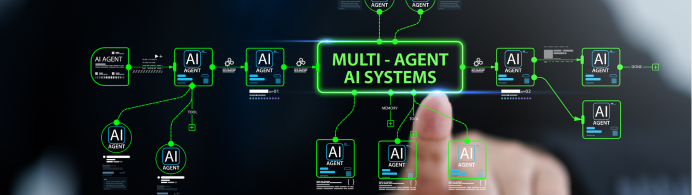
Enterprise AI is Becoming Multi-Agent
One of the clearest signals in Microsoft’s recent Copilot Studio news is that enterprise AI is evolving beyond standalone assistants and toward coordinated systems of specialized Copilot Studio agents. In its April 1, 2026, update, Microsoft highlighted generally available capabilities for multi-agent coordination across Microsoft Fabric, the Microsoft 365 Agents SDK and open Agent-to-Agent protocols, all aimed at helping agents work together across an organization’s broader ecosystem.
This matters because enterprise workflows rarely sit in one application or one data source. Most real business processes span collaboration tools, line-of-business systems, analytics platforms and operational data. Microsoft’s direction suggests that the next phase of AI value will come from connecting these experiences through orchestrated agents rather than relying on a single generalized assistant to handle every scenario effectively.
For business leaders, the implication is significant. The strategic question is shifting from whether the organization should deploy a copilot to how it should design an agent architecture that supports interoperability, reuse and scale across functions. Organizations that plan for connected agent ecosystems early will likely be better positioned to translate AI experimentation into sustainable enterprise impact.
Copilot Studio Governance and Evaluation
As enterprise AI adoption accelerates, Microsoft is making it clear that governance, evaluation and operational controls are no longer optional. Recent Copilot Studio updates place a strong emphasis on helping organizations move beyond experimentation and toward AI systems that can be trusted, measured and managed at scale.
In recent 2026 product updates, Microsoft highlighted expanded agent evaluation capabilities aimed at improving agent quality through tools such as real-time feedback, activity maps, validated test set templates and automated evaluation workflows. These enhancements build on broader Copilot Studio governance investments, including audit logging, session replay and built-in credentials that support more controlled, enterprise-ready automation scenarios.
The message to enterprise leaders is clear. The ability to deploy AI quickly is no longer a differentiator on its own. Long‑term value will come from building AI solutions that can be evaluated consistently, governed responsibly and improved continuously as business needs evolve.
Microsoft’s growing investment in evaluation tooling and governance guidance signals that successful AI programs will be treated like any other enterprise platform, with defined standards, controls and accountability.
Model Flexibility and Richer Business Context Will Differentiate Outcomes
Another important signal in Microsoft’s recent Copilot Studio news is that enterprise AI platforms are becoming more flexible in how they combine models, tools and business context. Microsoft’s April 1, 2026, update highlights expanded model options in preview scenarios, including additional support for Anthropic, xAI and GPT variants, while also emphasizing broader ways for agents to connect to external work apps and systems.
At the same time, Microsoft’s recent product updates show a growing focus on grounding agents in richer organizational context. The official “What’s new in Copilot Studio” page highlights Work IQ tools in preview, designed to connect Microsoft 365 Copilot and agents to real-time work insights from files, emails, meetings, chats and more. Microsoft’s 2026 release wave 1 overview also points to continued investment in extending agents built through Microsoft 365 Copilot’s Agent Builder, along with new knowledge types, more sophisticated tools and stronger support for evaluations and workflow actions.
For enterprise leaders, the takeaway is that competitive advantage will likely come from more than broad AI adoption alone. It will come from pairing the right model to the right use case, grounding outputs in the right business context and doing so within a platform that can scale across functions and workflows. Microsoft’s direction suggests that the future of enterprise AI will be shaped not just by where AI is available, but by how intelligently it is configured, connected and operationalized.
What’s Next
Microsoft’s latest Copilot Studio announcements point to a broader shift in enterprise AI. The conversation is moving beyond isolated assistant experiences and toward connected systems of agents that can operate across workflows, data and business platforms with greater flexibility, governance and scale. Recent updates across multi-agent orchestration, evaluation capabilities and richer contextual grounding all suggest that the next phase of enterprise value will come from how well organizations design, govern and operationalize AI across the business.
For enterprise leaders, the opportunity is clear. Now is the time to move from experimentation to intentional design by putting the right architecture, controls and operating model in place to support long-term AI adoption with Copilot Studio agents. Organizations that act early to build scalable, governed agent ecosystems will be better positioned to turn AI momentum into measurable business impact.
Contact Us
If your organization is evaluating how to move from AI pilots to a more scalable enterprise strategy, Withum can help.
Engage with Withum to assess your current state, identify practical use cases, define a governance approach and build a roadmap for adopting Microsoft Copilot Studio and agent-based AI in a way that aligns to your business goals.